
How Salaried People Can Legally Pay Zero Tax
Introduction
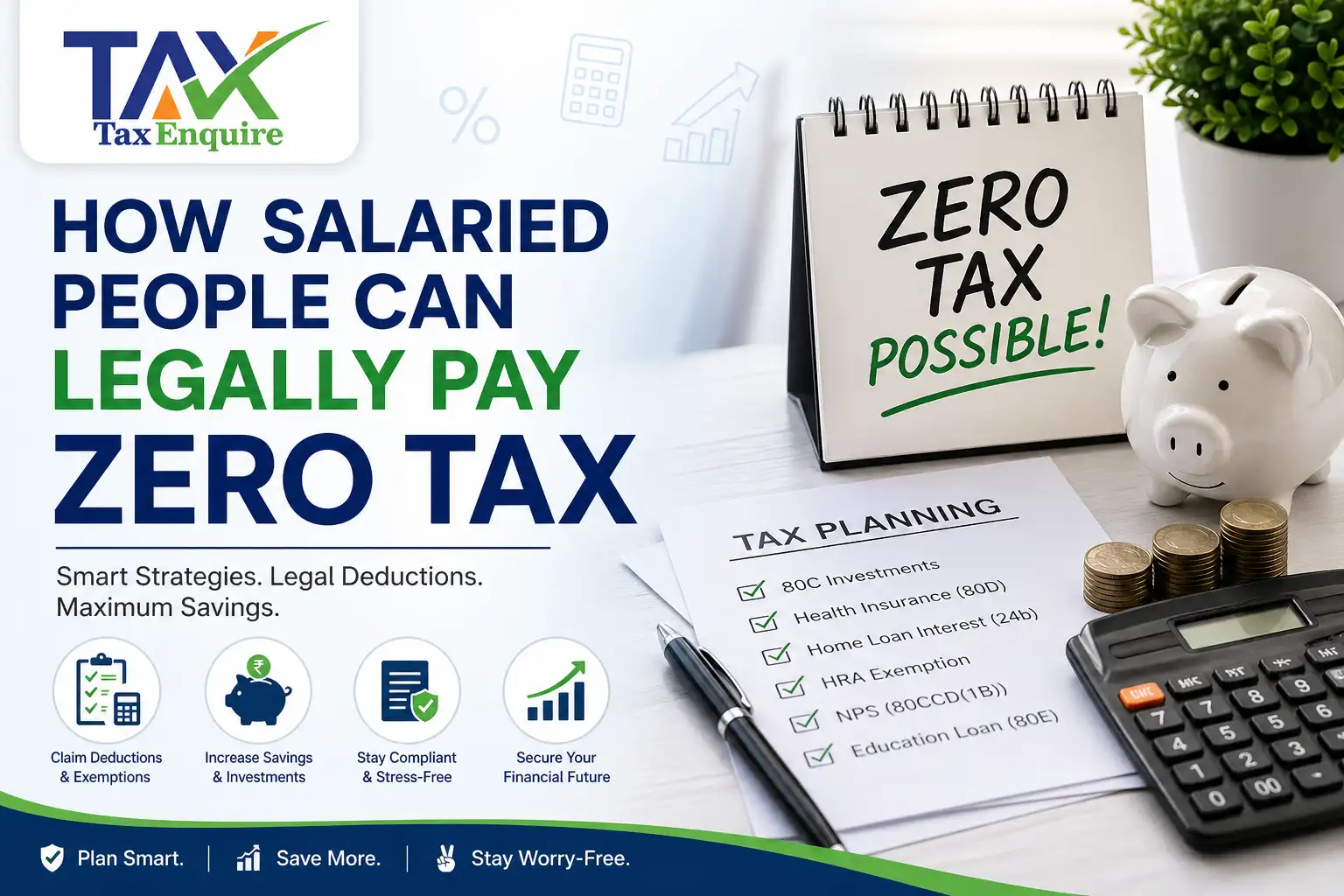
Paying zero tax might sound unrealistic for salaried individuals, but the truth is it is legally possible with proper tax planning. The Indian Income Tax system provides multiple deductions, exemptions, and rebates that can significantly reduce your taxable income.
However, it’s important to understand that:
“Zero tax” does not mean hiding income
It means optimizing your salary and investments within legal provisions
This guide will walk you through step-by-step strategies to help salaried individuals reduce their tax liability to zero completely legally.
Understanding the Basic Rule of Zero Tax
The concept of zero tax is simple:
Taxable Income = Total Income – Deductions – Exemptions
If your taxable income:
Falls below the basic exemption limit, OR
Qualifies for rebate under Section 87A
Your final tax liability becomes zero
Key Components:
Deductions (80C, 80D, etc.)
Exemptions (HRA, LTA, etc.)
Rebates (Section 87A)
The goal is not to reduce income, but to reduce taxable income smartly
Old vs New Tax Regime: Which Helps Achieve Zero Tax?
Old Tax Regime
Allows multiple deductions & exemptions
Ideal for tax-saving strategies
Best option for achieving zero tax
New Tax Regime
Lower tax rates
Very limited deductions
Only useful if income is already low
Final Insight: If your goal is zero tax, the Old Tax Regime is usually more effective because it allows deduction stacking.
Step-by-Step Strategy to Achieve Zero Tax
Follow this structured approach:
Step 1: Start with Gross Salary
Include:
Basic salary
HRA
Allowances
Bonuses
Step 2: Apply Standard Deduction
Flat deduction of ₹50,000
Automatically reduces taxable income
Step 3: Claim All Eligible Deductions
Use:
Section 80C
Section 80D
Home loan benefits
NPS contributions
Step 4: Use Section 87A Rebate
If taxable income is within rebate limit, Tax payable becomes zero
Key Deductions Every Salaried Person Must Use
These deductions are the backbone of zero tax planning:
1. Section 80C – Investment-Based Savings
Maximum deduction: ₹1.5 lakh
Popular options:
EPF
PPF
ELSS
LIC premium
Tax-saving FD
This is the most commonly used deduction
2. Section 80D – Health Insurance
Self & family: up to ₹25,000
Parents: additional ₹25,000–₹50,000
Helps reduce tax while securing your health financially
3. Section 24(b) – Home Loan Interest
Deduction up to ₹2 lakh
Applicable for self-occupied property
One of the biggest tax-saving tools
4. HRA (House Rent Allowance)
Available for salaried employees living in rented houses
Calculated based on Salary, Rent paid, and City of residence
Proper HRA planning can significantly reduce taxable income
5. Section 80CCD(1B) – NPS
Additional deduction: ₹50,000
Over and above 80C
Highly recommended for long-term tax saving + retirement
6. Section 80E – Education Loan Interest
No upper limit on deduction
Available for higher education loans
Ideal for young professionals
Salary Structuring Tricks to Reduce Tax
A well-structured salary can reduce tax drastically.
Include tax-efficient components:
HRA
LTA (Leave Travel Allowance)
Food coupons
Telephone/internet reimbursement
Discuss with your employer to restructure your salary
Real-Life Example: How ₹10–20 Lakh Salary Can Become Zero Tax
Let’s assume a salary of ₹12 lakh:
Final Taxable Income ≈ ₹7,25,000 or lower
With further exemptions (HRA, etc.), income can fall within rebate limits.
Result: Tax = Zero (with proper planning)
Maximum Deduction Strategy (Advanced Planning)
To maximize tax savings:
Combine all deductions:
80C + 80D + 80CCD
HRA + Home loan
Standard deduction
Smart Strategy:
Prioritize high-limit deductions
Use NPS for additional benefit
Optimize rent vs home loan
This “stacking method” is key to achieving zero tax
Common Mistakes That Prevent Zero Tax
Avoid these errors:
Choosing wrong tax regime
Not using full 80C limit
Ignoring HRA benefits
Poor investment planning
Lack of documentation
Even small mistakes can increase your tax liability
Can High Salary Individuals Pay Zero Tax?
Realistically:
Up to ₹10–12 lakh → possible
₹15–20 lakh → difficult but manageable
Above ₹20 lakh → very challenging
Zero tax becomes harder as income increases, but tax can still be minimized significantly
Legal vs Illegal Tax Saving
Legal Tax Planning
Using deductions
Claiming exemptions
Investing in approved instruments
Illegal Methods
Hiding income
Fake investments
False claims
Always follow legal and compliant method’s
Benefits of Proper Tax Planning
Proper tax planning is not just about saving money it is about building a strong financial foundation while staying fully compliant with the law. When done correctly, it can transform the way you manage your income, expenses, and future goals. Here are the key benefits explained in detail:
Zero or Minimal Tax Liability
One of the biggest advantages of effective tax planning is the ability to legally reduce your tax burden. By using available deduction’s, exemptions, and rebate’s, you can significantly lower your taxable income.
For many salaried individuals, this can even result in zero tax liability, especially when income is structured and investments are aligned with tax-saving provision’s. Instead of overpaying taxes, you retain more of your hard-earned income.
Better Financial Discipline
Tax planning encourages you to organize your finances systematically. To claim deduction’s, you need to:
Track your expenses
Maintain proper investment record’s
Plan your savings in advance
This habit builds financial discipline over time, helping you avoid last-minute decisions and impulsive spending. As a result, your overall money management improves significantly.
Higher Savings and Investments
Most tax-saving options are linked to productive financial instruments such as:
Provident fund’s
Insurance plan’s
Pension schemes
Mutual funds
This means tax planning doesn’t just save tax it also forces you to invest regularly. Over time, these investments grow and help you build wealth, achieve long-term goals, and secure your financial future.
Peace of Mind
When your taxes are properly planned and filed, you don’t have to worry about:
Errors in returns
Missed deadlines
Unexpected tax liabilities
This provides a sense of confidence and peace of mind, knowing that your finances are in order and compliant with tax laws. You can focus more on your career and personal goals instead of stressing over tax issues.
No Risk of Notices or Penalties
Incorrect filing, under-reporting income, or missing compliance requirement’s can lead to tax notice’s, penalties, or even legal complication’s.
Proper tax planning ensures:
Accurate reporting of income
Correct claim of deductions
Timely filing of returns
This minimizes the chances of scrutiny from tax authorities and keeps you safe from unnecessary legal trouble.
Why Choose Expert Help for Tax Planning
Professional help can:
Maximize deductions
Avoid mistakes
Provide personalized strategies
Ensure compliance
Especially useful for high-income individuals
Conclusion
Achieving zero tax as a salaried individual is not a myth, it's a strategy.
With:
Proper planning
Smart investments
Correct tax regime selection
You can legally reduce your tax liability to zero or near zero.
Final Thought: Tax saving is not about shortcuts; it's about smart financial planning within the law.
© 2026 Tax Esquire | Expert CA Services in Greater Noida, Uttar Pradesh
8810380146 | info.taxesquire@gmail.com | taxesquire.in
This document is for informational purposes only. For personalised tax advice, consult our chartered accountants.