Wage Structure & PF Calculation in Uttar Pradesh (FY 2026–27)
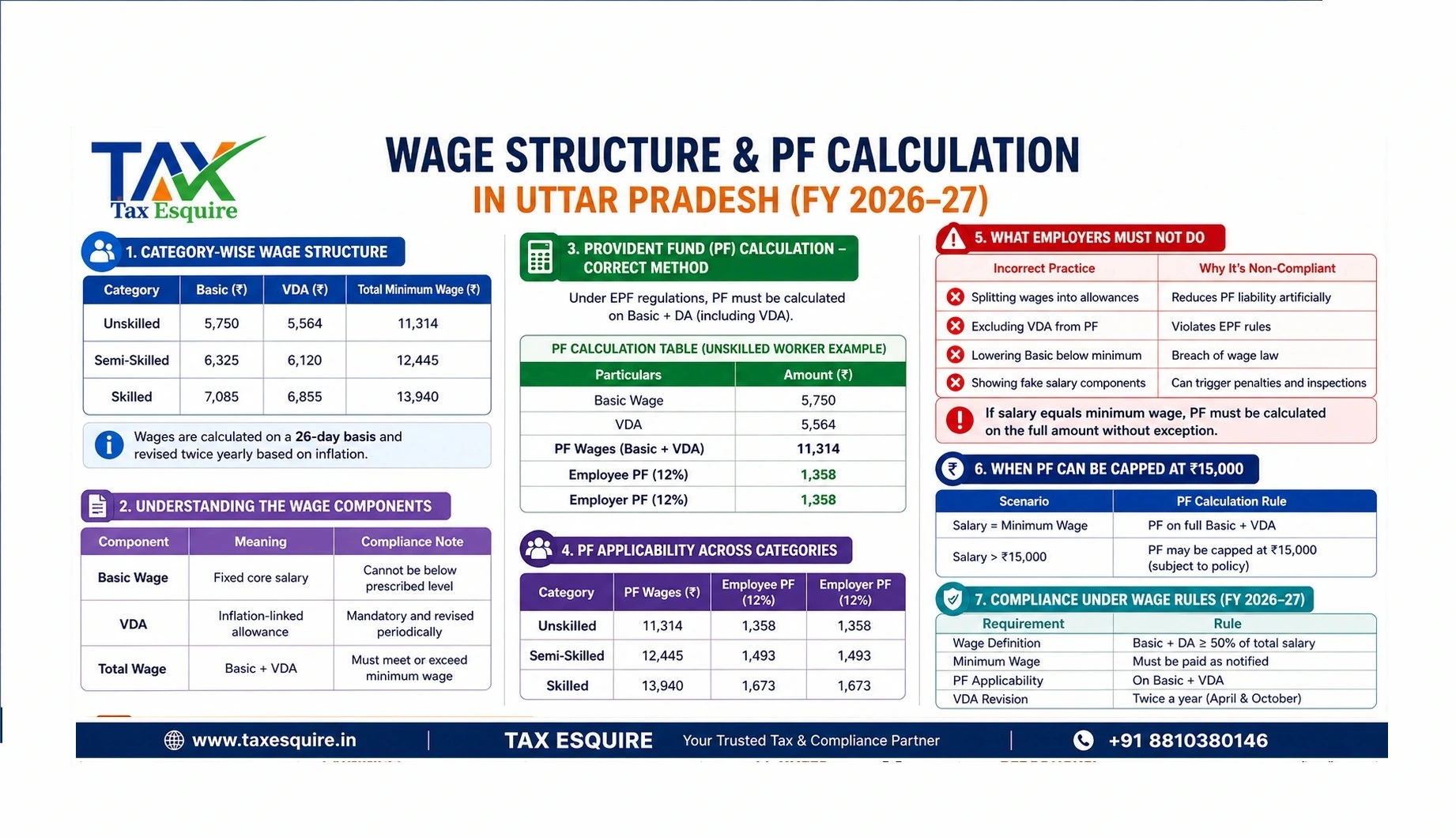
Understanding Wage Structure and PF applicability With changing laws and tighter enforcement, payroll compliance in India now demands precision especially when it comes to minimum wages and Provident Fund (PF) calculations. For employers in Uttar Pradesh, understanding the correct wage breakup is essential to avoid non-compliance and financial exposure. Whether you are a startup, SME, or large enterprise, understanding minimum wages, wage components, and PF applicability is essential to avoid penalties, litigation, and reputational risks. This comprehensive explains everything you need to know for FY 2026–27 in a clear and practical format. Minimum wages are the legally mandated lowest wages that employers must pay to workers. These wages are notified by the state government and are binding on all eligible establishments. In Uttar Pradesh, minimum wages consist strictly of: Basic Wage Variable Dearness Allowance (VDA) These two components together form the total minimum wage, and both are mandatory. Minimum wages are: Calculated on a 26-day working basis Revised twice a year (April & October) based on inflation Understanding the Wage Components Provident Fund (PF) Calculation – Correct Method Under EPF regulations, PF must be calculated on Basic + DA (including VDA). Rule: If an employee is paid minimum wages, PF must be calculated on the full wage amount without exception. What Employers Must Avoid To stay compliant, avoid these common errors: If salary equals minimum wage, PF must be calculated on the full amount without exception. When PF Can Be Capped at ₹15,000 Employers can limit PF contributions to ₹15,000 only if the employee’s salary exceeds this threshold and proper policy documentation exists. Compliance Under Wage Rules (FY 2026–27) A compliant payroll system offers multiple benefits: Legal Protection: Avoid penalties, notices, and legal disputes. Financial Accuracy: Prevents underpayment or overpayment of statutory dues. Final Takeaway Minimum wages in Uttar Pradesh are fully composed of Basic + VDA PF must be calculated on the entire wage amount, not a reduced figure Artificial structuring to reduce statutory liability can lead to serious compliance risks A transparent and compliant payroll system protects both employer and employee interests For businesses, the focus should not just be on salary disbursement—but on accurate structuring, statutory adherence, and audit readiness. TAX ESQUIRE recommends periodic payroll reviews to ensure alignment with evolving labour laws and notificationsMinimum Wages in Uttar Pradesh (Effective from April 2026)
Category-wise Wage Structure
PF Calculation Table (Unskilled Worker Example)
PF Applicability Across Categories
Practical Payroll Format (For Implementation)
Why Proper Wage Structuring Matters
Employee Trust: Transparent salary structures improve workforce confidence.
Audit Readiness: Ensures smooth inspections and documentation checks.