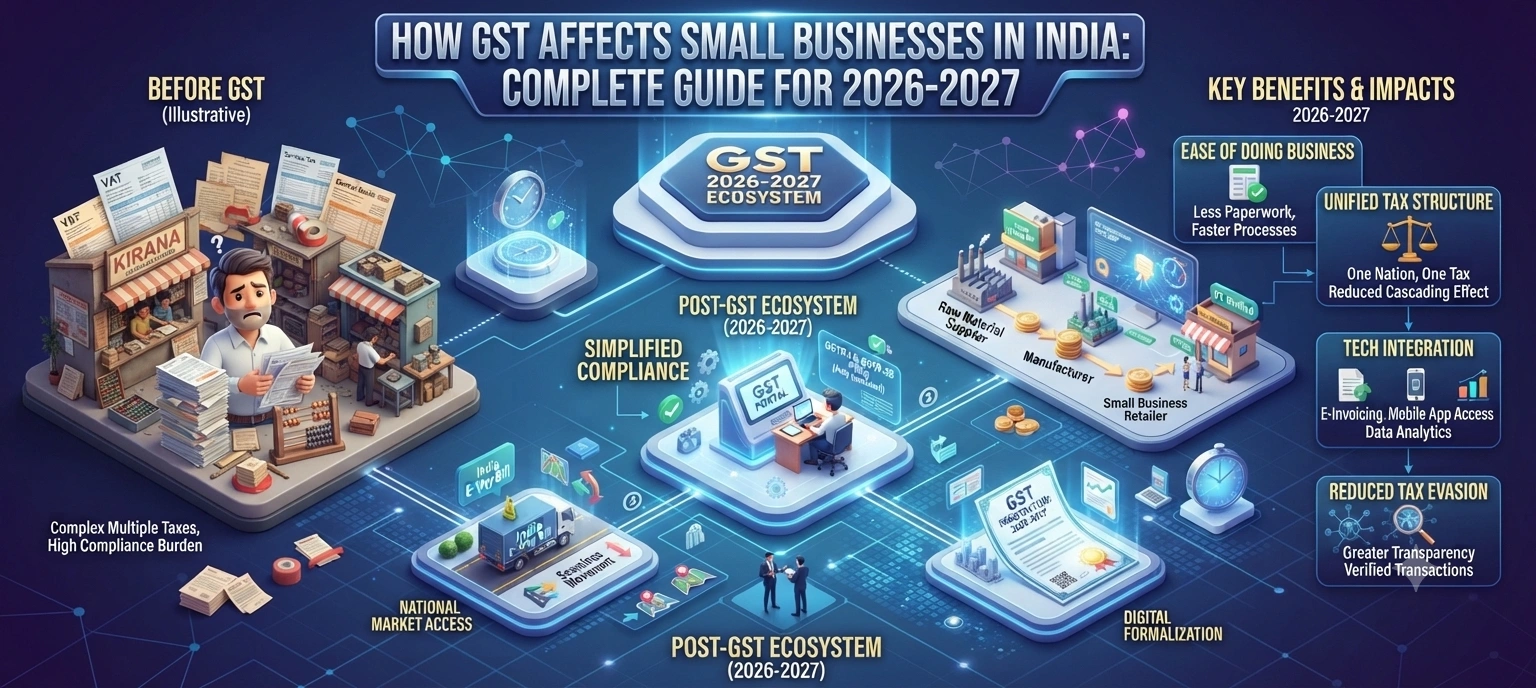
Section 80C Deductions in 2026: Complete Guide for Indian Taxpayers

Section 80C Deductions in 2026
Unlock tax savings up to Rs 1.5 lakh annually with smart Section 80C investments
What Is Section 80C and Why Should You Care?
Section 80C of the Income Tax Act is one of the most powerful tax-saving tools available to Indian taxpayers. It allows you to claim a deduction of up to Rs 1.5 lakh from your taxable income every financial year. So what does this mean for you? If you're earning Rs 10 lakh annually and you invest Rs 1.5 lakh in eligible instruments, you only pay tax on Rs 8.5 lakh. That's real money saved.
The thing is, many people don't use this benefit fully. They either don't know what qualifies or they're confused about the rules. And that's a shame because you're essentially leaving money on the table. This guide walks you through everything you need to know about Section 80C in 2026.
Let me be clear: Section 80C isn't just about life insurance. It covers many different investment types. The key is understanding which ones work best for your situation.
The Rs 1.5 Lakh Limit Explained
Every financial year, you can claim a maximum deduction of Rs 1.5 lakh under Section 80C. This is a combined limit across all eligible investments. You don't get Rs 1.5 lakh for life insurance and another Rs 1.5 lakh for PPF. It's one bucket, and everything goes into it.
Here's how it works in practice. Let's say in 2026-27, you pay Rs 60,000 as life insurance premium, invest Rs 50,000 in PPF, and buy an ELSS mutual fund worth Rs 40,000. Your total deduction is Rs 1.5 lakh? No, it's Rs 1.5 lakh only if your combined investment crosses that. In this case, your deduction is Rs 1.5 lakh (60,000 + 50,000 + 40,000 = 1.5 lakh). Perfect fit.
If you're in the 30% tax bracket, claiming the full Rs 1.5 lakh deduction saves you Rs 45,000 in taxes. That's money you can use for other goals.
But here's what many people miss: you need to actually invest the money. You can't just claim a deduction without proof. The investments must be made during the financial year (April 1 to March 31) to qualify for that year's deduction.
Eligible Investments Under Section 80C
Not every investment qualifies for Section 80C. The Income Tax Department has a specific list. Let me walk you through the main ones that matter for most taxpayers.
| Investment Type | Deduction Limit | Lock-in Period |
|---|---|---|
| Life Insurance Premium (LIC, Private) | No separate limit (within Rs 1.5 lakh) | Depends on policy |
| Public Provident Fund (PPF) | No separate limit (within Rs 1.5 lakh) | 15 years |
| ELSS Mutual Funds | No separate limit (within Rs 1.5 lakh) | 3 years |
| Home Loan Principal Repayment | No separate limit (within Rs 1.5 lakh) | N/A |
| National Savings Certificate (NSC) | No separate limit (within Rs 1.5 lakh) | 5 years |
| Senior Citizen Savings Scheme (SCSS) | No separate limit (within Rs 1.5 lakh) | 5 years |
| Sukanya Samriddhi Account | No separate limit (within Rs 1.5 lakh) | 21 years |
| Tuition Fees for Children's Education | No separate limit (within Rs 1.5 lakh) | N/A |
Life Insurance Premiums: The Most Common Route
Life insurance is how most Indians claim Section 80C deductions. And honestly, it makes sense. You're buying protection for your family while getting a tax break. Two birds with one stone.
Here's the thing: the deduction is on the premium you pay, not the sum assured. So if you buy a Rs 50 lakh policy but pay only Rs 30,000 annual premium, you get a deduction of Rs 30,000. The sum assured doesn't matter for tax purposes.
- Term insurance premiums qualify for Section 80C
- Endowment policies qualify for Section 80C
- Money-back policies qualify for Section 80C
- ULIPs (Unit Linked Insurance Plans) qualify for Section 80C
- Health insurance premiums do NOT qualify under Section 80C (they have Section 80D instead)
Let me give you a real example. Rajesh, a 35-year-old earning Rs 12 lakh annually, buys a 20-year term insurance policy with Rs 1 crore cover. He pays Rs 18,000 per year. He can claim Rs 18,000 as a deduction under Section 80C in 2026-27. If he's in the 20% tax bracket, he saves Rs 3,600 in taxes that year.
Don't buy a life insurance policy only for the tax deduction. The primary purpose should be to protect your family. If you don't need life cover, investing in ELSS or PPF is a better choice.
Public Provident Fund: The Safe Bet
PPF is one of the safest Section 80C investments available. It's backed by the government, offers decent returns, and has a 15-year lock-in period. So what's the catch? Your money is locked away for 15 years.
In 2026-27, you can invest up to Rs 1.5 lakh in PPF and claim the full amount as a deduction. The interest earned is also tax-free. And when you withdraw after 15 years, that's tax-free too. It's a three-layer tax benefit.
Let's do the math. You invest Rs 1.5 lakh in PPF in 2026. Assume an average return of 7% per year. After 15 years, your investment grows to about Rs 41 lakh. You saved taxes on Rs 1.5 lakh annually for 15 years, plus you earned tax-free returns. That's powerful.
- Minimum annual investment: Rs 500
- Maximum annual investment: Rs 1.5 lakh
- Lock-in period: 15 years
- Partial withdrawal allowed after 7 years
- Can extend for 5 years after maturity
- Interest rate set by government quarterly
But here's where people get confused: can you invest Rs 1.5 lakh in PPF and Rs 1.5 lakh in life insurance and claim both? No. The combined limit is Rs 1.5 lakh across all Section 80C investments. If you max out PPF, you can't claim any other Section 80C deduction that year.
ELSS Mutual Funds: The Growth Option
ELSS stands for Equity Linked Savings Scheme. These are mutual funds that invest primarily in equities and offer Section 80C deductions. The lock-in period is just 3 years, which is shorter than PPF. And historically, they've delivered better returns than PPF.
Think of ELSS as the middle ground. You get tax benefits, reasonable growth potential, and liquidity after 3 years. PPF is safer but returns are lower. Stock market direct investment has no lock-in but no tax deduction either.
Here's a practical example. Priya invests Rs 1.5 lakh in an ELSS fund in April 2026. After 3 years (April 2029), the investment grows to Rs 2.1 lakh. She saved taxes on Rs 1.5 lakh for 3 years. If she's in the 30% bracket, that's Rs 45,000 saved. Plus she made a gain of Rs 60,000 on her investment. The capital gains tax on that gain is 0% if held for more than a year (which it is). So she made Rs 60,000 tax-free. That's the power of ELSS.
ELSS funds have shown average returns of 12-15% annually over the long term, compared to PPF's 7-8%. The shorter 3-year lock-in also gives you more flexibility.
Home Loan Principal: Underrated and Overlooked
If you have a home loan, the principal repayment amount qualifies for Section 80C. But many people don't claim this because they're not aware. And that's a missed opportunity.
Let me explain the difference. Your EMI has two components: principal and interest. The principal part is deductible under Section 80C. The interest part is deductible under Section 24. So you get tax benefits on both, but they're under different sections.
Here's an example. Amit has a home loan with a monthly EMI of Rs 50,000. Of this, Rs 30,000 goes toward principal and Rs 20,000 goes toward interest. He can claim Rs 30,000 × 12 = Rs 3.6 lakh as Section 80C deduction. Plus he can claim Rs 20,000 × 12 = Rs 2.4 lakh as Section 24 deduction. But wait, the Section 80C limit is Rs 1.5 lakh. So he can only claim Rs 1.5 lakh under 80C, and the remaining Rs 2.1 lakh of principal can't be claimed. However, the full Rs 2.4 lakh interest can be claimed under Section 24 with no limit.
You can't claim home loan principal under Section 80C if you're already maxing out your deduction with other investments like PPF or insurance. The Rs 1.5 lakh limit applies across all investments combined.
Education Expenses: Tuition Fees Only
You can claim tuition fees paid for your children's education under Section 80C. But here's the catch: only tuition fees. Not books, not uniforms, not transportation, not hostel fees. Just tuition.
And there's another limit. You can claim for a maximum of two children. So if you have three kids, you can only claim for two of them.
Let's say you pay Rs 2 lakh annually as tuition fees for your two children. You can claim Rs 2 lakh under Section 80C. But remember, this is part of the Rs 1.5 lakh limit. You can't claim Rs 2 lakh for education and also Rs 1.5 lakh for insurance. You have to choose or split.
National Savings Certificate and Other Government Schemes
NSC is a government savings scheme where you can invest and get a guaranteed return. The investment qualifies for Section 80C deduction. The lock-in period is 5 years.
In 2026, NSC offers about 6.8% interest per annum. It's safe because it's government-backed, but the returns are lower than ELSS. So NSC is best for people who want absolute safety and don't mind lower returns.
- Senior Citizen Savings Scheme (SCSS) is for people aged 60 and above
- Sukanya Samriddhi Account is for girls under 10 years
- Both offer Section 80C deductions
- Both are government-backed and very safe
- Returns are moderate but guaranteed
Creating Your 80C Strategy for 2026-27
So how do you actually use Section 80C effectively? It's not just about investing Rs 1.5 lakh somewhere. You need a strategy.
First, figure out your income and tax bracket. If you earn Rs 5 lakh annually, you're in the 0% bracket (no tax). Section 80C doesn't help you. But if you earn Rs 15 lakh, you're in the 30% bracket. Every Rs 1 of deduction saves you 30 paise. So the higher your income, the more valuable Section 80C becomes.
Second, assess your life stage. Are you young and earning well? Invest in ELSS for growth. Are you close to retirement? PPF offers safety. Do you have young children? Sukanya Samriddhi makes sense.
Third, don't just chase deductions. Invest in instruments that match your goals. If you don't need life insurance, don't buy it just for the deduction. If you don't need a home loan, don't take one for the tax benefit.
Here's a sample strategy for someone earning Rs 12 lakh in 2026-27:
- Buy a term insurance policy: Rs 40,000 (genuine need for family protection)
- Invest in PPF: Rs 60,000 (long-term security)
- Invest in ELSS: Rs 50,000 (growth with tax benefit)
- Total: Rs 1.5 lakh deduction
This spreads your investments across safety (PPF), growth (ELSS), and protection (insurance). You get the full Rs 1.5 lakh deduction, and you're not putting all eggs in one basket.
What Doesn't Qualify Under Section 80C
It's just as important to know what doesn't qualify. Many people make mistakes here.
- Direct stock market investments don't qualify (buy mutual funds instead)
- Health insurance premiums don't qualify (they fall under Section 80D)
- Savings account deposits don't qualify
- Fixed deposits don't qualify
- Cryptocurrency investments don't qualify
- Rent paid doesn't qualify
Documentation and Proof Requirements
You can't just claim Section 80C deductions without proof. The Income Tax Department wants documentation. And honestly, they're right to ask.
For life insurance, keep your policy documents and premium receipts. For PPF, keep your account statements. For ELSS, keep your mutual fund statements. For home loans, keep your loan agreement and EMI receipts. For education, keep school fee receipts and bills.
When you file your ITR (Income Tax Return), you don't need to attach all these documents. But keep them safe. If the IT Department asks for verification, you need to produce them within 30 days. If you can't, they'll disallow your deduction and add penalty and interest on top.
Don't claim deductions for investments you haven't actually made. The IT Department cross-checks with banks, insurance companies, and mutual funds. If your claim doesn't match their records, you'll face a notice and penalties.
Common Mistakes People Make
After working with hundreds of clients, I've seen patterns in how people mess up their Section 80C planning.
Mistake 1: Claiming the same investment twice. You can't claim an ELSS investment under Section 80C and then claim the gains under another section. Once you claim the deduction, the gains are taxed according to the rules of that investment.
Mistake 2: Forgetting about the Rs 1.5 lakh limit. People invest Rs 2 lakh in PPF and expect a Rs 2 lakh deduction. Doesn't work. The limit is Rs 1.5 lakh. The extra Rs 50,000 doesn't get any deduction.
Mistake 3: Claiming deductions for investments made after March 31. If you invest in April 2027, it qualifies for 2027-28, not 2026-27. Many people make investments in early April thinking they're for the previous year.
Mistake 4: Not using the full limit. If you earn Rs 20 lakh and only invest Rs 50,000, you're wasting Rs 1 lakh of deduction opportunity. That's Rs 30,000 in lost tax savings if you're in the 30% bracket.
Mistake 5: Buying unsuitable investments just for deductions. Never buy a 20-year endowment policy if you only need 5-year protection. Never lock money in PPF if you'll need it in 2 years. Deductions should be a side benefit, not the main reason.
Frequently Asked Questions
Q1: Can my spouse claim Section 80C deductions separately?
Yes. Each person gets their own Rs 1.5 lakh limit. If you and your spouse both earn income, you can each claim Rs 1.5 lakh separately. So as a couple, you can claim up to Rs 3 lakh combined. But the investments must be in individual names, not joint.
Q2: What happens if I don't invest the full Rs 1.5 lakh?
You claim only what you invest. If you invest Rs 80,000, you get a deduction of Rs 80,000. There's no penalty for not using the full limit. But you're missing out on tax savings. If you're in the 30% bracket, you're losing Rs 21,000 in potential tax savings.
Q3: Can I claim Section 80C if I'm filing ITR as a non-resident?
This depends on your residency status and the specific investment. Generally, if you're a non-resident Indian (NRI) and earning income in India, you can claim deductions on investments made in India. But tax rules for NRIs are complex. Consult a CA before filing.
Q4: Can I claim Section 80C for my parents' investments?
No. Each person can only claim deductions for investments made in their own name. You can't claim for your parents' PPF or insurance. But you can help them invest and they can claim the deduction.
Q5: Is the interest earned on Section 80C investments taxable?
It depends on the investment. PPF interest is completely tax-free. ELSS gains are taxed as long-term capital gains (0% if held for more than a year). Life insurance maturity amount is tax-free. NSC interest is taxable. So choose based on your tax situation.
Final Thoughts: Making Section 80C Work for You
Section 80C is one of the best tax-saving tools available to Indian taxpayers. But it only works if you use it strategically. Don't just invest randomly. Think about your goals, your timeline, your risk appetite, and your tax bracket. Then choose investments that align with all of these.
And remember: tax deductions are a bonus, not the main goal. Your primary investment goal should be wealth creation and financial security. Deductions are the cherry on top.
In 2026-27, make sure you're not leaving money on the table. If you're earning a decent income, use the full Rs 1.5 lakh deduction. Plan early. Invest consistently. Keep proper documentation. And watch your tax bill shrink.
" } ```
© 2026 Tax Esquire | Expert CA Services in Greater Noida, Uttar Pradesh
8810380146 | info.taxesquire@gmail.com | taxesquire.in
This document is for informational purposes only. For personalised tax advice, consult our chartered accountants.