GST Career Opportunities After Certification: Your Complete 2026-2027 Guide
GST Career Opportunities After Certification
A senior CA's honest look at what your GST certification can actually do for your career
Why Your GST Certification Matters Right Now
Look, I've been in this field long enough to see what sticks and what doesn't. GST certification isn't just another credential to hang on your wall. It's become the gateway to real income growth in India's tax world. Why? Because GST compliance is now woven into every business operation, and companies desperately need people who actually understand it.
The thing is, when GST rolled out in 2017, most professionals were scrambling. Now in 2026, the landscape has completely settled. Businesses know they need specialists. They're willing to pay well for them. And that's where your certification gets you noticed.
But here's what most people don't realize: having the certificate alone isn't enough. You need to know where to look, what roles are actually hiring, and how to position yourself. That's what we're going to cover today.
GST-certified professionals in 2026 are earning 30-50% more than non-certified peers in similar roles, with even bigger jumps for those working as independent consultants.
The Main Career Paths Available to You
And here's the reality: your GST certification opens up way more doors than you might think. Most people focus on just one or two paths, but there are actually five solid career directions you can take. Let me walk you through each one.
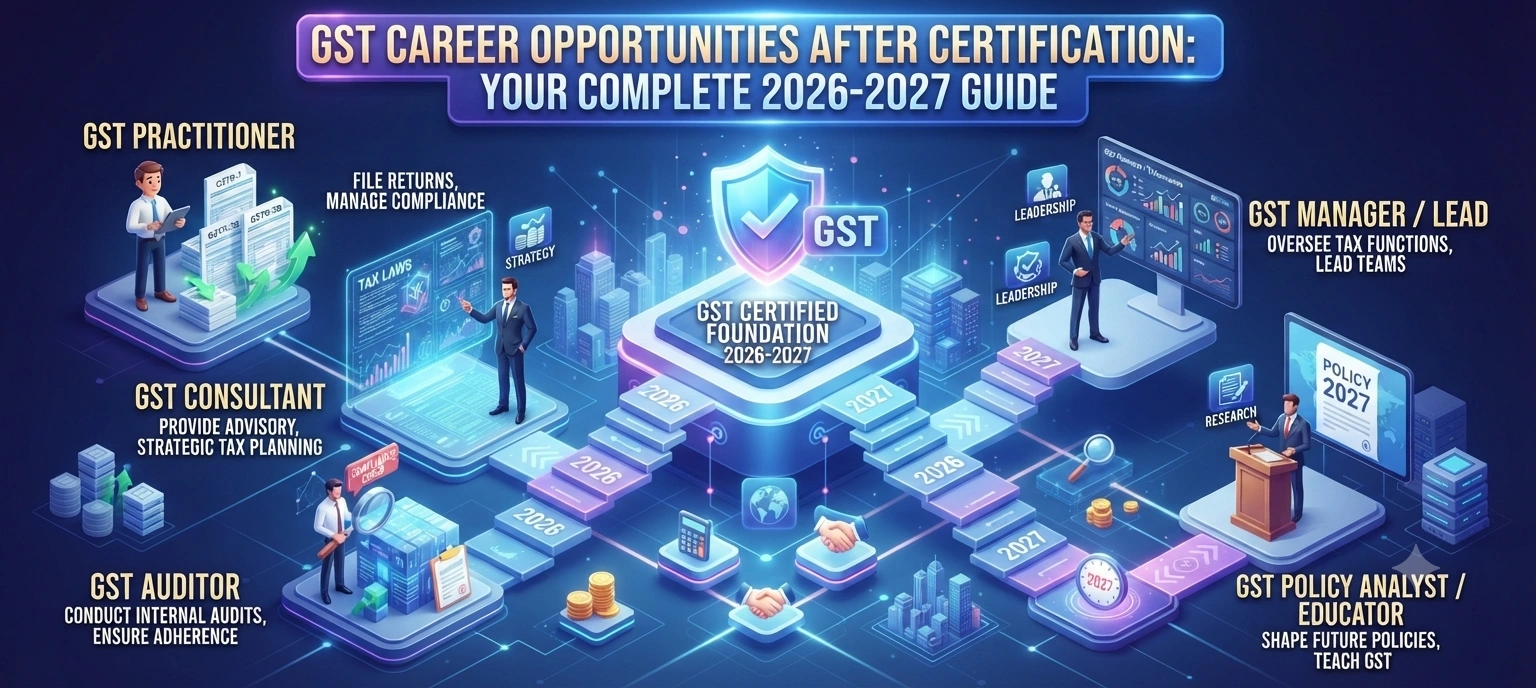
1. GST Consultant (Independent or Firm-Based)
This is probably the most obvious choice, but it's also the most lucrative. As a GST consultant, you'd help businesses with compliance, filing, planning, and dispute resolution. Put simply, you're their tax expert for GST matters.
If you're working with a CA firm or tax consultancy, you'd typically handle multiple clients and earn between ₹3.5 to ₹7 lakhs annually (depending on the firm and your experience). But if you go independent? That's where things get interesting. Independent GST consultants can charge ₹500 to ₹2,000+ per hour, and many build retainer relationships with 15-20 clients. I know consultants making ₹15-25 lakhs yearly by 2026.
The catch? You need a strong client base and reputation. It's not overnight money.
2. GST Compliance Officer (In-House Role)
Many mid-sized and large companies now hire dedicated GST compliance officers. Your job would be to handle all GST filings, maintain records, manage audits, and ensure the company stays compliant. It's steady, predictable work.
Salary range in 2026-2027? Typically ₹4 to ₹8 lakhs per year, with benefits. Manufacturing companies, e-commerce firms, and logistics providers are hiring hard right now. The work is structured, and you get benefits like health insurance, leave, and job security.
Honestly, this path appeals to people who like stability over hustle.
3. GST Audit Specialist
GST audits are becoming more common as tax authorities ramp up scrutiny. Companies need people who can prepare for audits, represent them before authorities, and navigate assessments. If you're detail-oriented and like investigative work, this could be your lane.
Audit specialists typically earn ₹5 to ₹10 lakhs yearly in firm settings, and independent specialists can charge ₹1,000 to ₹3,000 per audit engagement. High-stakes audits (for large companies) pay significantly more.
4. GST Training and Content Expert
The demand for GST training is massive. Online platforms, corporate training programs, and educational institutions all need people who can teach GST effectively. If you're good at explaining complex stuff simply, this path pays well and offers flexibility.
You could earn ₹2 to ₹6 lakhs yearly from training platforms, plus additional income from corporate workshops. Some trainers earn ₹20,000+ per session for specialized training.
5. GST Software Implementation Specialist
Companies need people who understand both GST and software. If you know how GST works and can navigate implementation of GST software systems, you're valuable. Tech companies and software firms hire these specialists.
Salary range: ₹6 to ₹12 lakhs yearly, with potential for higher roles in product management.
| Career Path | Annual Salary Range (2026-2027) | Best For |
|---|---|---|
| Independent Consultant | ₹12-25 lakhs+ | Self-starters with client networks |
| Firm-Based Consultant | ₹3.5-7 lakhs | Team players who want structure |
| In-House Compliance Officer | ₹4-8 lakhs | People who value job security |
| Audit Specialist | ₹5-10 lakhs | Detail-oriented professionals |
| Training Expert | ₹2-6 lakhs base + per-session fees | Good communicators |
| Software Specialist | ₹6-12 lakhs | Tech-savvy professionals |
Where to Actually Find These Jobs in 2026-2027
So what does this mean for you practically? Where do you actually apply? Let me give you the real sources, not the generic advice.
- LinkedIn and Indeed: Post your GST certification prominently. Many recruiters actively search for "GST certified" profiles. Update your headline to include it.
- CA Firm Websites: Most top CA firms (Big 4, mid-tier firms) have career pages. They're actively hiring GST specialists. Apply directly.
- Industry-Specific Job Boards: E-commerce, manufacturing, and logistics companies post on their own sites. Check Amazon, Flipkart, Mahindra, Bajaj careers pages.
- Tax and Accounting Job Portals: Sites like TaxGuru, Vakilsearch, and Legaldesk have dedicated job sections for tax professionals.
- Networking: Join GST-focused groups on LinkedIn, attend ICAI events, and connect with CA firms. Many jobs aren't posted publicly.
- Freelance Platforms: Upwork, Fiverr, and local Indian platforms like Instahyre have GST consulting gigs. Good for side income.
Don't just apply to every job. Tailor your resume and cover letter to highlight your GST-specific experience. Generic applications get deleted. Companies want to see you understand GST deeply, not just that you have a certificate.
Skills That Actually Make You Hireable
Here's the thing: the certification gets you in the door. But these skills are what make employers actually want to hire you.
- GST Return Filing (GSTR-1, GSTR-3B, GSTR-9): You need hands-on experience, not just theoretical knowledge.
- GST Software Proficiency: Know how to use Tally, SAP, or other accounting software with GST modules. This is non-negotiable.
- ITC Management and Compliance: Understanding input tax credit rules is crucial. Companies value people who can optimize ITC legally.
- GST Audit and Assessment: Experience with GST audits, responding to notices, and representing clients makes you way more valuable.
- Compliance Calendar Management: Knowing all GST deadlines, amendments, and regulatory changes shows you're serious.
And honestly? Communication skills matter too. You'll be explaining GST to non-finance people. If you can't break it down simply, you won't last long.
Real Career Growth Trajectory
Let me show you what actual career progression looks like. This is based on people I know who've succeeded since GST started.
Year 1 (2026): You get your GST certification and land a junior role at a CA firm or as an in-house officer. You're earning ₹3.5 to ₹5 lakhs, handling basic compliance and filings. You're learning everything.
Year 2-3: You've handled 20-30 clients or managed multiple company accounts. You understand nuances. You're now a senior GST consultant or compliance manager earning ₹6 to ₹9 lakhs.
Year 4-5: You're either leading a team at a firm, managing GST for a large company, or running your own consulting practice. Income ranges from ₹10 to ₹20 lakhs+.
The fastest growth happens when you go independent, but it's also riskier. The safest path is firm-based work for 3-4 years, then going independent with an established client base.
GST professionals who build expertise in specific sectors (e-commerce, manufacturing, imports/exports) can command 50-100% premium fees because they're rare and highly valuable.
Challenges You'll Actually Face
But I wouldn't be honest if I didn't tell you the tough parts. GST is constantly changing. You'll need to stay updated or you'll become irrelevant fast.
- Regulatory Changes: GST rules change frequently. You need to invest time in continuous learning. Missing an update could cost you clients or your job.
- Compliance Pressure: Deadlines are strict. Missing a filing deadline isn't just unprofessional—it's costly for clients. The pressure is real.
- Client Expectations: Not all clients understand GST. You'll spend time educating them. Some won't listen and then blame you when things go wrong.
- Audit Scrutiny: GST audits are increasing. You need to be prepared to defend client positions. One mistake can damage your reputation.
- Income Inconsistency (if independent): Building a client base takes time. Your first year as an independent consultant might be lean.
Building Your GST Career: Practical Steps
So you've got the certification. What's next? Here's exactly what you should do.
Step 1: Get Practical Experience Don't just sit with theory. Work on real GST cases. Whether it's at a firm or in-house, handle actual client matters. This is what employers care about.
Step 2: Specialize in a Sector E-commerce GST is different from manufacturing GST. Different from import/export. Pick one and become really good at it. Specialists earn more.
Step 3: Build Your Network Connect with other GST professionals, CA firms, and business owners. Most good opportunities come through people you know, not job boards.
Step 4: Stay Updated Follow GST updates from the official portal, ICAI, and reputable tax blogs. Subscribe to GST newsletters. Join online communities. This isn't optional.
Step 5: Build Your Personal Brand Write articles, create content, or share insights on LinkedIn. When people recognize you as a GST expert, opportunities come to you.
Step 6: Consider Additional Certifications FEMA, Customs, or advanced tax courses make you more valuable. You don't need them immediately, but they help with growth.
Salary Negotiation Tips for GST Professionals
When you're offered a position, don't just accept the first number. Here's how to negotiate smartly.
- Research Market Rates: Check Glassdoor, Ambition Box, and PayScale for GST professional salaries in your city. Know what's fair.
- Highlight Your Specific Skills: If you've handled complex audits or managed high-value accounts, mention it. That's worth more money.
- Don't Reveal Your Previous Salary: Many companies will try to anchor based on what you earned before. Keep that private.
- Ask for Benefits, Not Just Salary: If they can't increase base salary, ask for better health insurance, flexible hours, or learning budget.
- Get It in Writing: Whatever is agreed, get it documented. Verbal promises disappear.
Going Independent: The Real Story
Many GST professionals dream of being independent. It's attractive because of the income potential. But let me tell you what it actually involves.
First, you need clients. Lots of them. Most independent consultants start with 5-8 clients from their previous firm or company. That's your foundation. You need to grow it to 15-20 to make decent income.
Second, you're running a business, not just doing GST. You handle invoicing, tax, marketing, and client relations. That's work beyond just GST compliance.
Third, you need a safety net. Your first year might be lean. You need savings to cover expenses and gaps in income. Most successful independent consultants had 6-12 months of expenses saved before going solo.
That said, if you can build a client base, the income potential is real. I know consultants earning ₹20-40 lakhs yearly by 2027. But it took them 3-4 years to get there.
Don't go independent without a client base. You'll struggle. Get 8-10 clients committed to working with you before you quit your job. And make sure you have legal structure set up—register as a sole proprietor or partnership, get PAN, and file returns properly.
Industries Hiring GST Professionals in 2026-2027
Not all industries value GST expertise equally. Some are hiring aggressively right now.
- E-Commerce and Online Retail: Amazon, Flipkart, Meesho, and smaller players all need GST experts. High growth sector.
- Manufacturing: GST compliance for manufacturers is complex. They're always hiring.
- Logistics and Supply Chain: Companies like Delhivery, Shiprocket need GST specialists for their operations.
- Financial Services: Banks, fintech, and insurance companies need GST experts for their operations.
- Real Estate: Developers need GST compliance expertise. Growing demand.
- CA Firms and Tax Consultancies: Always hiring good GST professionals.
Frequently Asked Questions
Q1: Do I need a CA degree to work as a GST consultant?
No. You don't need to be a CA. But you do need GST certification and experience. Many successful GST consultants are commerce graduates or CMA professionals. What matters is expertise, not the degree.
Q2: How long does it take to build a profitable independent practice?
Realistically? 2-3 years. Your first year is about building the client base. By year 2, you're profitable. By year 3, you're earning well. It depends on how hard you work and how good your network is.
Q3: What's the best certification to get alongside GST certification?
It depends on your focus. For import/export GST, get Customs knowledge. For e-commerce, understand Amazon and Flipkart seller compliance. For manufacturing, learn about ITC and input tax credits deeply. Specialize based on where you want to work.
Q4: Can I earn well as a GST professional without going independent?
Absolutely. Senior GST consultants at big firms earn ₹10-15 lakhs yearly. In-house compliance managers at large companies earn ₹8-12 lakhs. You don't need to be independent to earn well. You just need to be really good at what you do.
Q5: How often do I need to update my GST knowledge?
Continuously. GST rules change every few months. You should spend at least 2-3 hours weekly staying updated. Read official notifications, follow ICAI updates, and join professional groups. It's not optional if you want to stay relevant.
Q6: What's the difference between a GST consultant and a GST compliance officer?
A consultant works with multiple clients, advising on strategy and compliance. A compliance officer works for one company, managing their day-to-day GST operations. Consultants have more variety and higher income potential. Officers have more stability and predictable hours.
Final Thoughts: Is This Career Right for You?
Look, GST is here to stay. It's not a temporary thing. That means GST expertise will remain valuable for years to come. Your certification opens real doors.
But it's not a magic ticket. You need to be willing to learn continuously, stay updated, and actually develop expertise. If you're the type who gets certified and then ignores updates, you'll struggle.
If you're willing to put in the work, the rewards are real. Good income, job security, and growing demand. That's a solid career foundation.
The best time to start building your GST career was 2017. The second best time is right now, in 2026. Don't wait.
" } ```
© 2026 Tax Esquire | Expert CA Services in Greater Noida, Uttar Pradesh
8810380146 | info.taxesquire@gmail.com | taxesquire.in
This document is for informational purposes only. For personalised tax advice, consult our chartered accountants.