Old vs New Income Tax Act – What Has Changed from 1 April 2026?
Introduction
India’s tax system is entering a new era. From 1 April 2026, the government plans to implement the Income Tax Act, 2025, replacing the decades-old framework that has governed taxation since 1961.
This shift is not just about changing laws, it is about simplifying taxation, reducing confusion, and making compliance easier for individuals and businesses. In this blog, we break down the key differences between the old and new Income Tax Acts, and what they mean for taxpayers.
The Old Income Tax Act, 1961
The Income Tax Act, 1961 has been the backbone of India’s taxation system for over six decades.
Key Features:
Detailed and comprehensive law covering all income types
Numerous sections, provisos, and amendments
Heavy reliance on legal interpretation
Frequent updates through Finance Acts
Challenges:
Complex language difficult for common taxpayers
High compliance burden
Multiple interpretations leading to litigation
While effective, the old Act gradually became lengthy, technical, and difficult to navigate.
The New Income Tax Act, 2025
The Income Tax Act, 2025 aims to modernize and simplify taxation.
Key Highlights:
Clear and simplified language
Reduced number of sections
Logical structure for easy understanding
Focus on digital and automated compliance
The goal is simple: Make tax laws understandable even for non-experts
Why Was a New Income Tax Act Needed?
1. Over-Complexity: The old Act had become too technical due to continuous amendments.
2. High Compliance Burden: Taxpayers often required professional help for even simple filings.
3. Litigation Issues: Ambiguous wording led to disputes and court cases.
4. Changing Economy: The modern digital economy requires updated laws.
The new Act addresses these issues by focusing on clarity, simplicity, and efficiency.
Major Structural Changes in the New Act
Fewer sections and simplified drafting
Removal of redundant provisions
Better classification of income categories
Logical flow of chapters
This restructuring ensures that users can find relevant provisions quickly without confusion.
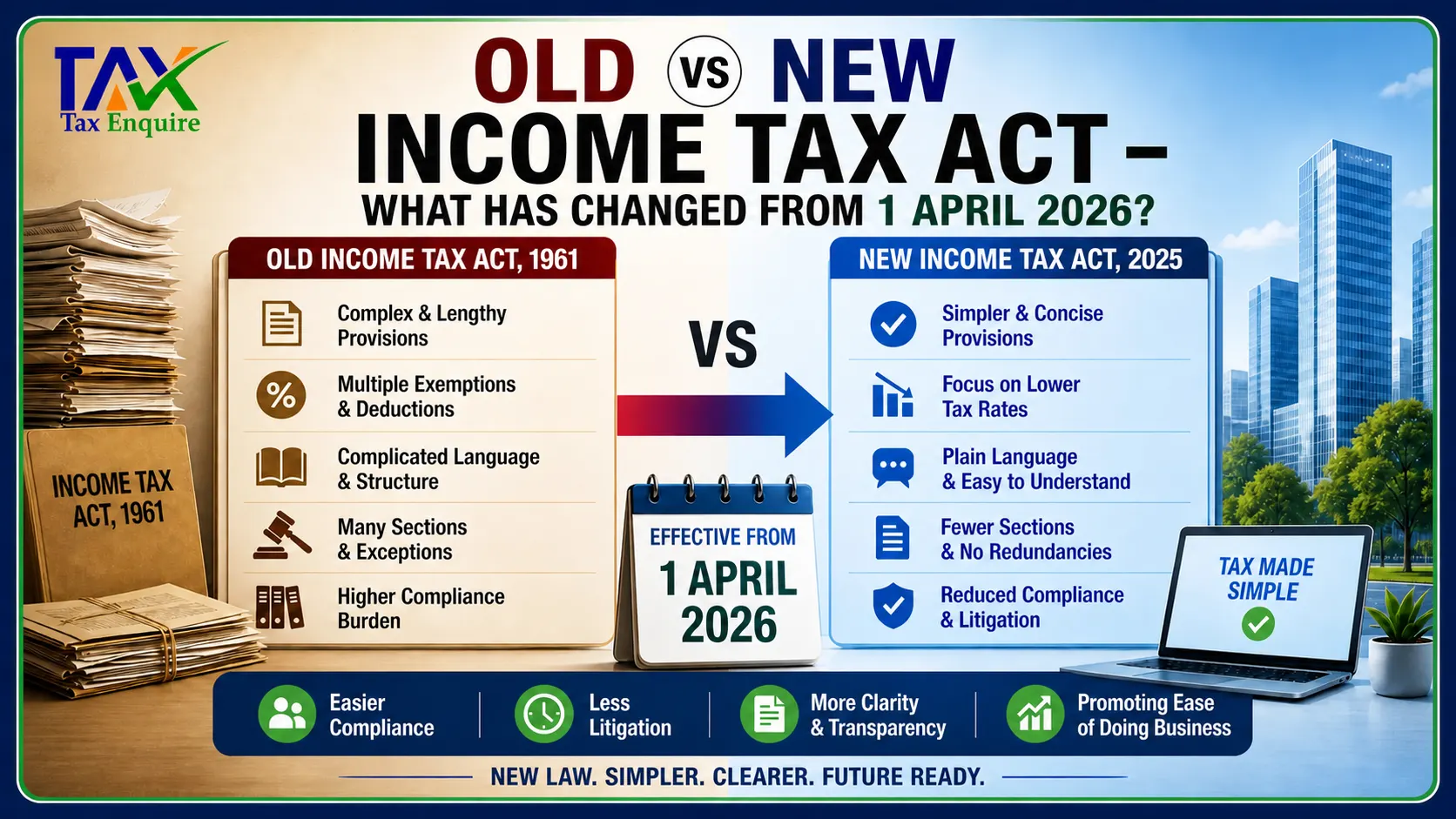
Old vs New Income Tax Act
1. Structure and Length
Old Act: Lengthy, complex, and scattered
New Act: Shorter, organized, and structured
2. Definitions and Terminology
Old Act: Legal jargon and technical terms
New Act: Simple and easy-to-understand language
3. Tax Provisions and Scope
Old Act: Multiple overlapping provisions
New Act: Streamlined and clearly defined rules
4. Compliance Requirements
Old Act: Heavy documentation and procedural burden
New Act: Simplified compliance with fewer steps
5. Documentation and Filing Process
Old Act: Manual intervention and complexity
New Act: Digital-first, faster processing
Changes in Tax Regime Framework
The concept of old vs new tax regime continues, but with improvements:
New regime expected to become more dominant
Simplified tax slabs and fewer deductions
Greater focus on ease of calculation
Taxpayers may find it easier to choose the most beneficial regime.
Key Changes Affecting Individuals
Simplified salary income calculation
Reduced dependency on deductions
Clearer capital gains rules
Result: Less confusion and faster tax filing
Key Changes Affecting Businesses & Professionals
Simplified presumptive taxation
Easier compliance for SMEs
Reduced paperwork
This is especially beneficial for:
Freelancers
Startups
Small business owners
Impact on Investors and Capital Markets
More clarity in capital gains taxation
Better-defined holding periods
Transparent tax treatment of investments
Investors benefit from predictability and better planning opportunities.
Compliance and Filing Changes
Key Improvements:
Fully digital processes
Faster return processing
Reduced notices and scrutiny
The system is moving towards automation and minimal human intervention.
Benefits of the New Income Tax Act
This is where the Income Tax Act, 2025 truly makes a difference. Unlike the older framework, the new law is designed with a modern, practical, and user-friendly approach, making taxation easier for everyone from salaried individuals to business owners.
Let’s break down each benefit in detail:
1. Simplified Tax Structure
One of the biggest advantages of the new Act is its simplified structure.
What has changed?
The number of sections and sub-sections has been reduced
Complex cross-references are minimized
Provisions are arranged in a logical and systematic manner
Impact: Even a person with basic financial knowledge can now read, understand, and apply tax rules without feeling overwhelmed.
2. Reduced Legal Complexity
The old Income Tax Act was known for its technical language and multiple interpretations, which often created confusion.
What has improved?
Use of simple and clear language
Removal of redundant and outdated provisions
Better clarity in definitions and rules
Impact: This leads to fewer disputes, reduced litigation, and more certainty in tax planning.
3. Improved Transparency
Transparency is a key goal of the new tax system.
What has changed?
Clearly defined tax rules
Straightforward calculation methods
Better explanation of tax liability
Impact: This builds trust between taxpayers and the government, improving voluntary compliance.
4. Faster Compliance
The new Act focuses heavily on speed and efficiency.
Key improvements:
Simplified return filing process
Reduced documentation requirements
Integration with digital systems
Impact: Taxpayers can complete compliance in less time with fewer errors, saving both effort and professional costs.
5. Taxpayer-Friendly Approach
The new Income Tax Act is designed with the taxpayer in mind.
What makes it user-friendly?
Simple and easy-to-read language
Logical arrangement of provisions
Reduced technical jargon
Impact: Taxation becomes less stressful, more understandable, and more manageable.
Challenges and Concerns
Despite benefits, some concerns remain:
Transition from old to new system
Need for awareness among taxpayers
Initial confusion during implementation
Proper guidance and planning will be crucial.
Old vs New Income Tax Act: Pros and Cons
Understanding the strengths and limitations of both the old and new Income Tax Acts is essential for taxpayers, professionals, and businesses. While the old system provided stability over decades, the new law focuses on simplicity, efficiency, and modernization.
Old Act
Pros of the Old Act
1.Well-Established System
The old Income Tax Act has been in force for more than 60 years, making it a mature and time-tested framework.
Why this is beneficial:
Tax professionals are highly familiar with it
Strong judicial precedents exist
Clear interpretations available through case laws
Impact: Taxpayers and consultants could rely on past rulings and established practices for decision-making.
2. Detailed Provisions
The old Act is extremely comprehensive and detailed, covering almost every possible tax scenario.
What this includes:
Specific rules for different types of income
Detailed deduction and exemption provisions
Extensive coverage of complex transactions
Impact: This level of detail ensures that very few situations are left unaddressed, which can be helpful in complex cases.
New Act
Pros of the New Act
1. Simple and Structured
The new Act is designed to be clear, concise, and logically organized.
Key improvements:
Simplified language
Reduced number of sections
Better arrangement of provisions
Impact: Taxpayers can understand tax rules more easily without expert help.
2. Easy Compliance
Compliance processes are now more streamlined and efficient.
What has improved:
Fewer steps in return filing
Reduced documentation requirements
Simplified tax calculations
Impact:
Saves time and effort
Reduces dependency on professionals
Minimizes errors
3. Reduced Disputes
The new Act minimizes ambiguity by using clear definitions and straightforward provisions.
Why this matters:
Less room for multiple interpretations
Greater certainty in tax treatment
Impact:
Fewer legal disputes
Lower litigation costs
Faster resolution of issues
4. Digital-Friendly
The new system is built for a digital-first environment.
Features:
Integration with online filing systems
Automated processes
Real-time data validation
Impact:
Faster processing of returns
Reduced manual intervention
Improved accuracy and transparency
Who Should Be More Careful After 2026?
Salaried individuals choosing tax regimes
Freelancers managing income reporting
Small businesses adapting to new compliance rules
These groups must understand changes thoroughly to avoid mistakes.
Expert Tips for Smooth Transition
Maintain proper financial record’s
Compare old vs new tax regimes carefully
Stay updated with new rules
Seek professional advice if needed
Early preparation = stress-free compliance
Conclusion
The shift from the Income Tax Act, 1961 to the Income Tax Act, 2025 is a major reform in India's taxation system. It reflects the government intent to create a simpler, transparent, and taxpayer-friendly environment. While the transition may require some adjustment, the long-term benefits, especially ease of compliance and reduced complexity make it a positive change for everyone.