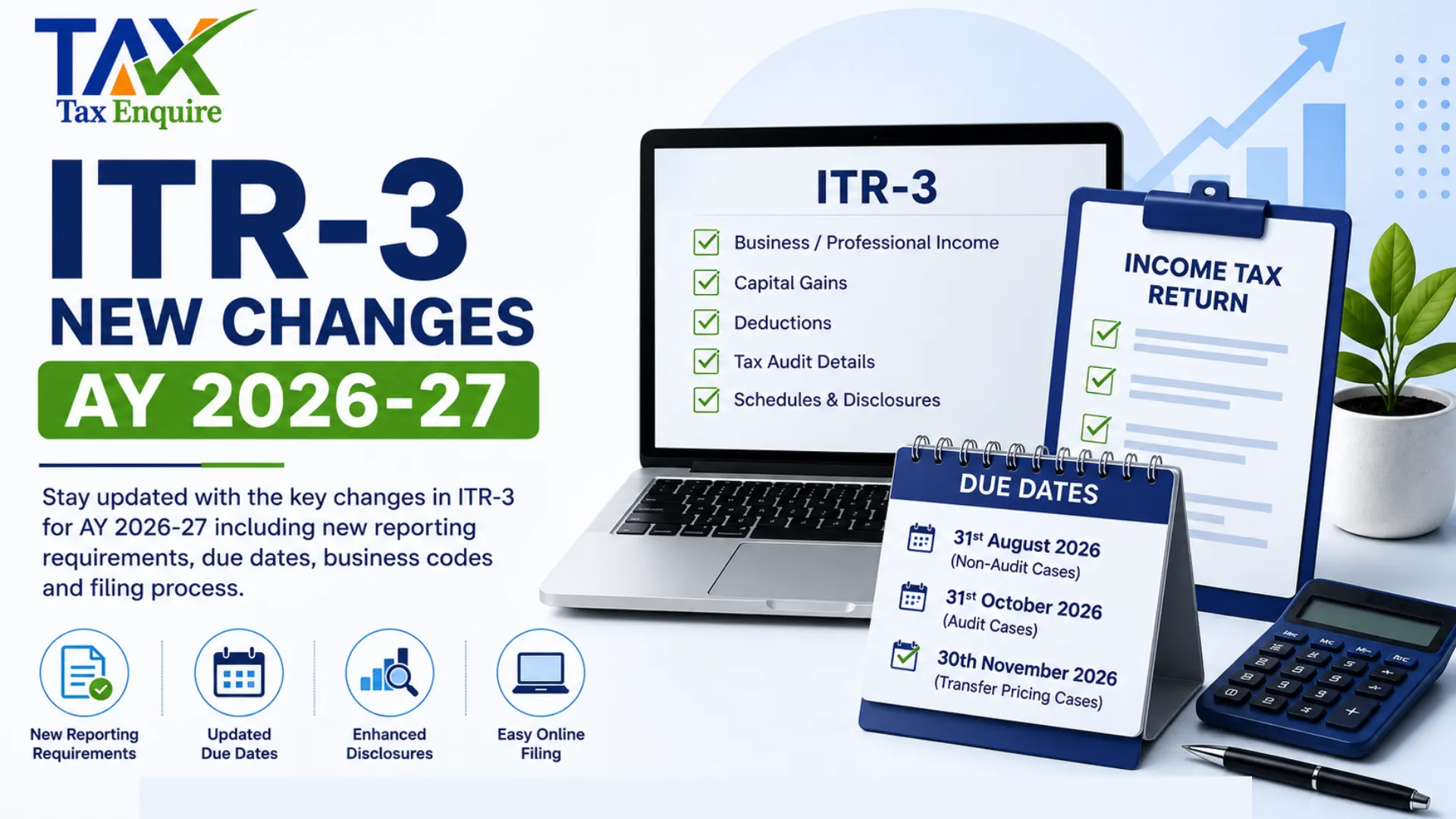
Major Changes in ITR Forms AY 2026-27
Introduction
The Income Tax Department has introduced several important changes in the Income Tax Return (ITR) forms for Assessment Year (AY) 2025-26. These updates aim to simplify return filing, improve transparency, and ensure better reporting of income and deductions. Taxpayers must carefully review the revised forms before filing their returns to avoid errors, notices, or delays in processing.
The new ITR forms include changes related to eligibility criteria, reporting requirements, capital gains disclosure, deductions, tax regime selection, and revised return filing. Understanding these modifications is essential for salaried individuals, business owners, professionals, and presumptive taxpayers.
Key Changes Introduced in New ITR Forms
The updated ITR forms for AY 2025-26 contain multiple structural and disclosure-related changes. Some major revisions include:
Expansion of eligibility for filing ITR-1 and ITR-4
New reporting field for unrealised rent
Removal of separate fields for 15% Short-Term Capital Gains (STCG) and 10% Long-Term Capital Gains (LTCG)
Updated process for opting out of the new tax regime
Changes related to representative assessee filing
Removal of Section 89A relief field in ITR-1 and ITR-4
Additional deduction disclosure requirements
Reporting of revised return late fee under Section 234-I
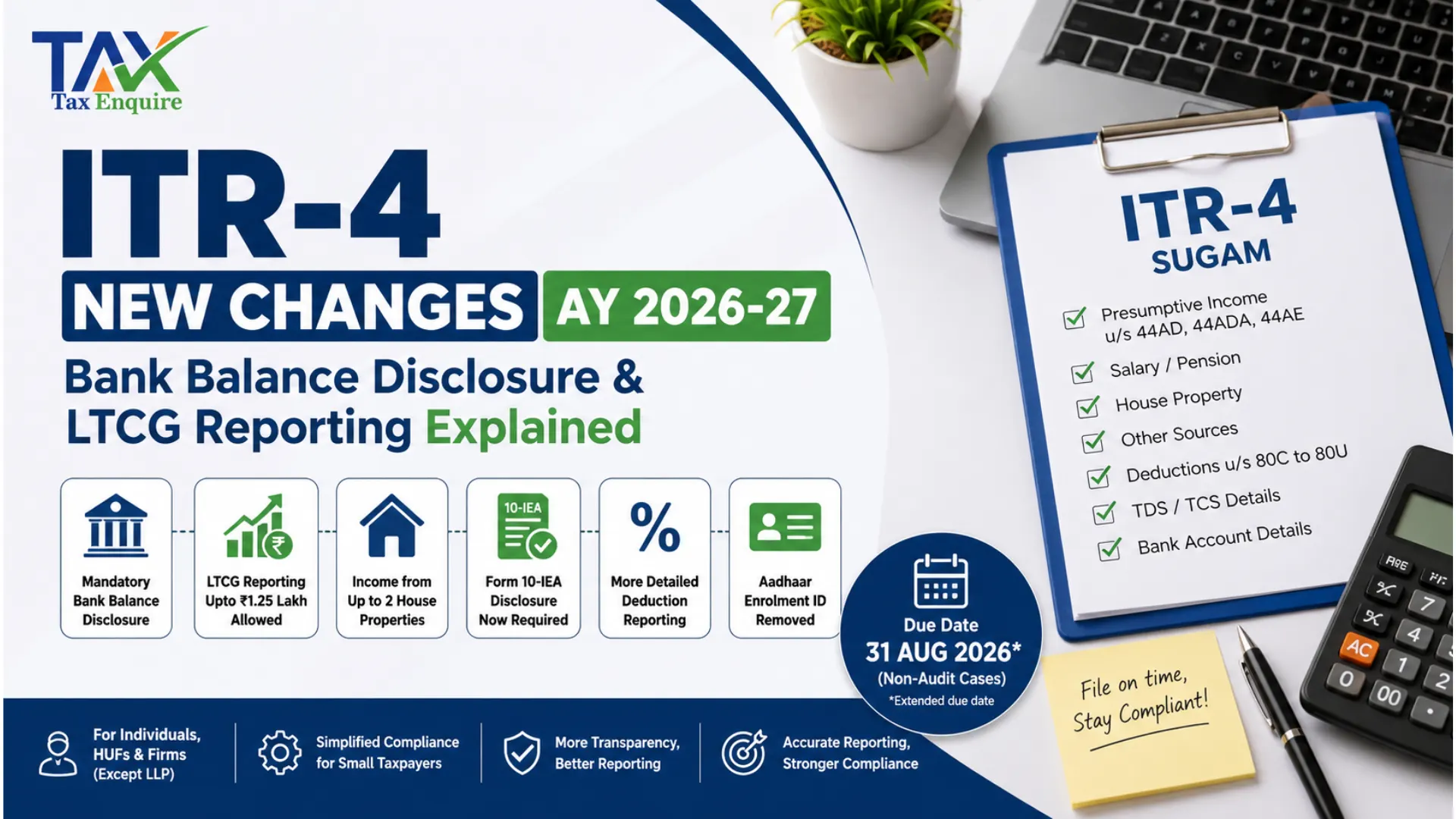
Additional investment and bank balance disclosures in ITR-4
These changes are intended to improve accuracy and strengthen compliance.
Expansion of Eligibility to File ITR-1 And ITR-4
The government has expanded the eligibility criteria for filing ITR-1 (Sahaj) and ITR-4 (Sugam). More taxpayers with simpler income structures can now use these simplified forms.
ITR-1 Eligibility
ITR-1 can generally be filed by resident individuals having:
Salary or pension income
Income from one house property
Other income such as interest
Total income within prescribed limits
ITR-4 Eligibility
ITR-4 can be used by:
Resident individuals
Hindu Undivided Families (HUFs)
Firms other than LLPs
Taxpayers opting for presumptive taxation under Sections 44AD, 44ADA, or 44AE
The expansion reduces the compliance burden for small taxpayers and professionals.
Additional Field - Unrealised Rent
A new reporting field has been introduced for unrealised rent in the house property schedule. Taxpayers earning rental income must now provide additional details regarding rent that could not be recovered from tenants.
This change helps the Income Tax Department verify deductions claimed for unrealised rent and improves reporting transparency in property income disclosures.
Taxpayers should maintain proper documentation such as:
Rental agreements
Legal notices
Tenant communication records
Evidence of recovery efforts
15% STCG and 10% LTCG Fields Removed
The revised ITR forms have removed separate reporting fields for:
15% Short-Term Capital Gains (STCG)
10% Long-Term Capital Gains (LTCG)
Instead, taxpayers are now required to report capital gains under revised consolidated schedules. This restructuring simplifies capital gain reporting and aligns the forms with updated tax computation mechanisms.
However, taxpayers must still maintain accurate records of:
Purchase and sale dates
Cost of acquisition
Sale consideration
Securities transaction details
Opting Out of the New Tax Regime
The new tax regime continues to remain the default tax regime for individuals and HUFs. Taxpayers wishing to continue under the old tax regime must specifically opt out while filing their return.
Business taxpayers opting out of the new regime should carefully review the applicable conditions, as switching rules may differ for those having business or professional income.
Taxpayers should compare:
Available deductions and exemptions
Applicable slab rates
Total tax liability under both regimes
before selecting the appropriate option.
ITR filing by Representative Assessee
The updated ITR forms include revised reporting requirements for returns filed by a representative assessee.
A representative assessee may file the return on behalf of:
Minor individuals
Deceased persons
Mentally incapacitated individuals
Non-residents in certain cases
The forms now require additional information regarding:
Capacity of the representative
PAN and identification details
Relationship with the assessee
This improves accountability and proper identification during return processing.
Section 89A Relief - Field removed from Form ITR 1 and 4
The specific field relating to Section 89A relief has been removed from ITR-1 and ITR-4.
Section 89A generally provides relief to residents having income from foreign retirement benefit accounts maintained in notified countries. Taxpayers claiming such relief may now need to use other applicable ITR forms based on their income structure and disclosure requirements.
Taxpayers with foreign income or overseas retirement accounts should carefully verify the correct ITR form before filing.
Additional Details for Claiming Deductions
The new ITR forms require taxpayers to provide more detailed information while claiming deductions under various sections of the Income Tax Act.
Additional disclosure may include:
Policy numbers
Institution names
Donation reference details
Loan account information
Investment evidence particulars
This change aims to reduce incorrect deduction claims and improve verification during assessment.
Taxpayers should keep all supporting documents ready before filing their returns.
1. Section 234-I - Revised Return Late Fee
The updated forms now include reporting related to late filing fees applicable on revised returns under Section 234-I.
Taxpayers filing revised or updated returns after prescribed timelines may have to pay additional fees and interest. The department has strengthened disclosure requirements to ensure proper compliance and accurate tax reporting.
Timely filing of original returns can help taxpayers avoid:
Additional interest
Penalties
Delayed refunds
Compliance notices
2. Section 80G- Donations
Taxpayers claiming deduction under Section 80G must provide additional details of donations made to eligible charitable institutions, such as donation amount, institution name, and receipt details. Valid supporting documents should be maintained for claiming the deduction.
3. Section 80G- Donations to Political Parties
The new ITR forms require additional disclosure for deductions claimed on donations made to political parties or electoral trusts under Section 80GGC. Only non-cash donations are eligible for deduction, and taxpayers should keep proper payment proof and transaction details.
Investments and Bank Balance Details - ITR 4
Additional disclosure requirements have been introduced in ITR-4 regarding:
Investments
Bank account balances
Financial information
Taxpayers opting for presumptive taxation may now need to provide more detailed financial disclosures despite simplified taxation provisions.
These disclosures help authorities:
Verify financial consistency
Detect under-reporting
Improve transparency in presumptive taxation cases
Proper maintenance of bank statements and investment records is therefore important.
How to Choose the Correct ITR Form
Selecting the correct ITR form depends on the taxpayer’s:
Residential status
Nature of income
Total income
Capital gains
Business or professional income
Foreign assets or foreign income
Commonly Used ITR Forms
Filing the wrong form may result in a defective return notice from the Income Tax Department.
Due Date to File Income Tax Return for AY 2025-2026
The due dates for filing Income Tax Returns for AY 2025-26 are generally as follows:
Taxpayers should file returns before the due date to avoid penalties and interest.
Conclusion
The new ITR forms for AY 2025-26 introduce several important changes aimed at improving compliance, transparency, and ease of reporting. From expanded eligibility for simplified forms to additional disclosure requirements and revised tax regime reporting, taxpayers must carefully review the updated forms before filing.
Understanding these changes in advance can help taxpayers file accurate returns, avoid notices, and ensure smooth processing of refunds. Proper documentation, timely filing, and selecting the correct ITR form remain essential for hassle-free tax compliance
Author: CA POONAM GUPTA & ADV LOKESH GUPTA