Startup Registration in India: Documents Required, Benefits, Tax Incentives & New 2024 Updates

Startup Registration in India
Your comprehensive guide to startup registration, DPIIT recognition, tax benefits, and compliance requirements in 2024
What is Startup Registration in India?
Startup registration in India is a formal process of recognizing and registering a newly established business entity with the Department for Promotion of Industry and Internal Trade (DPIIT). This recognition provides startups with numerous tax benefits, regulatory exemptions, and access to government support schemes. A startup is defined as an entity incorporated or registered in India not more than 10 years ago, with annual turnover not exceeding Rs. 100 crores, and working towards innovation, development, or improvement of products or processes.
The startup ecosystem in India has witnessed exponential growth, with over 100,000 registered startups as of 2024. This growth is driven by government initiatives, investor confidence, and a thriving entrepreneurial culture. Understanding the registration process and available benefits is crucial for entrepreneurs looking to establish their ventures legally and optimize their tax position.
Startup registration provides access to tax exemptions, regulatory exemptions, and government funding opportunities that can significantly reduce operational costs and accelerate business growth.
Eligibility Criteria for Startup Registration
Before proceeding with startup registration, ensure your business meets the DPIIT eligibility criteria. These criteria are designed to identify genuine startups engaged in innovation and development activities.
- Entity must be incorporated or registered in India as a Private Limited Company, LLP, or Partnership Firm
- Age of entity should not exceed 10 years from the date of incorporation or registration
- Annual turnover should not exceed Rs. 100 crores in any preceding financial year
- Entity must be working towards innovation, development, or improvement of products or processes
- Entity should not be formed by splitting or reconstruction of an existing operating business
- Entity should be engaged in development, production, or delivery of products or services driven by technology or intellectual property
Entities formed by splitting or reconstruction of existing businesses are not eligible for startup recognition. DPIIT conducts thorough verification of business activities and ownership structure before granting recognition.
Documents Required for Startup Registration
Proper documentation is essential for smooth startup registration. The following documents are required for DPIIT recognition and compliance with regulatory authorities.
Corporate Documents
- Certificate of Incorporation (for Private Limited Company) or Registration Certificate (for LLP/Partnership)
- Memorandum of Association (MoA) and Articles of Association (AoA)
- Board Resolution approving startup registration application
- List of Directors/Partners with their DIN/PAN
- Registered Office address proof with utility bills
Financial Documents
- Audited Financial Statements for the last 2 financial years (if applicable)
- Income Tax Returns filed for the last 2 years
- Bank statements for the last 6 months
- GST Registration Certificate (if registered)
- Proof of capital investment or funding received
Innovation & IP Documents
- Detailed business plan highlighting innovation and unique value proposition
- Patent applications or granted patents (if any)
- Trademark registrations or applications
- Copyright registrations for software or creative works
- Technical documentation or product specifications
- Research and development reports
Personal Documents
- PAN and Aadhar of all Directors/Partners
- Address proof (Passport, Voter ID, or Driving License)
- Educational qualifications and professional certifications
- Declaration regarding criminal history or litigation
| Document Category | Required Documents | Validity Period |
|---|---|---|
| Corporate | CoI, MoA, AoA, Board Resolution | Current |
| Financial | Audited FS, ITR, Bank Statements | Last 2 years |
| Innovation | Business Plan, Patents, IP Documents | Current |
| Personal | PAN, Aadhar, Address Proof | Current |
Step-by-Step Startup Registration Process
The startup registration process involves multiple steps and can be completed online through the DPIIT portal. Here is a detailed breakdown of the registration procedure.
Step 1: Prepare Documentation
Gather all required documents as listed above. Ensure all documents are authentic, properly signed, and notarized where required. Prepare a comprehensive business plan that clearly articulates your innovation, market opportunity, and business model. This documentation forms the foundation of your registration application.
Step 2: Register on DPIIT Portal
Visit the official DPIIT startup recognition portal (startupindia.gov.in) and create an account using your email ID and mobile number. Verify your email and phone through OTP. Complete your profile with basic company information, including name, registration number, and industry sector.
Step 3: Fill Application Form
Complete the online application form with accurate information. The form requires details about your business, team members, innovation focus, and financial information. Upload all required documents in the specified format. Ensure all information matches your supporting documents to avoid rejection.
Step 4: Submit Application
Review your application thoroughly before submission. Submit the application through the portal. You will receive a confirmation email with your application reference number. Keep this number for future correspondence and tracking.
Step 5: Verification and Approval
DPIIT will verify your application and supporting documents. This process typically takes 7-15 working days. You may receive requests for additional information or clarification. Respond promptly to such requests to expedite the approval process. Once approved, you will receive a startup recognition certificate via email.
Tax Benefits and Exemptions for Startups
One of the most significant advantages of startup registration is access to substantial tax benefits. These benefits are designed to reduce the tax burden on startups during their critical growth phase.
Section 80-IAC: Income Tax Exemption
Section 80-IAC of the Income Tax Act provides a 100% deduction of profits and gains for eligible startups. This is one of the most valuable tax incentives available to startups in India.
- Eligible startups can claim 100% deduction of profits and gains for 3 consecutive assessment years
- The 3-year period can be chosen by the startup within 7 years from the date of incorporation
- The startup must be recognized by DPIIT to claim this benefit
- The startup must be engaged in the business of innovation or development of products or processes
- The startup must not have been formed by splitting or reconstruction of an existing business
A startup earning Rs. 50 lakhs profit in a year can save Rs. 12.5 lakhs in income tax (assuming 25% tax rate) by claiming Section 80-IAC deduction. Over 3 years, this can result in savings exceeding Rs. 37.5 lakhs.
Capital Gains Exemption
Startups can claim exemption from capital gains tax under Section 54GB of the Income Tax Act. This applies to capital gains from the sale of residential property invested in a startup.
Patent Registration Rebate
Startups are eligible for a 80% rebate on patent filing and prosecution fees. This encourages startups to protect their intellectual property and innovations.
GST Benefits
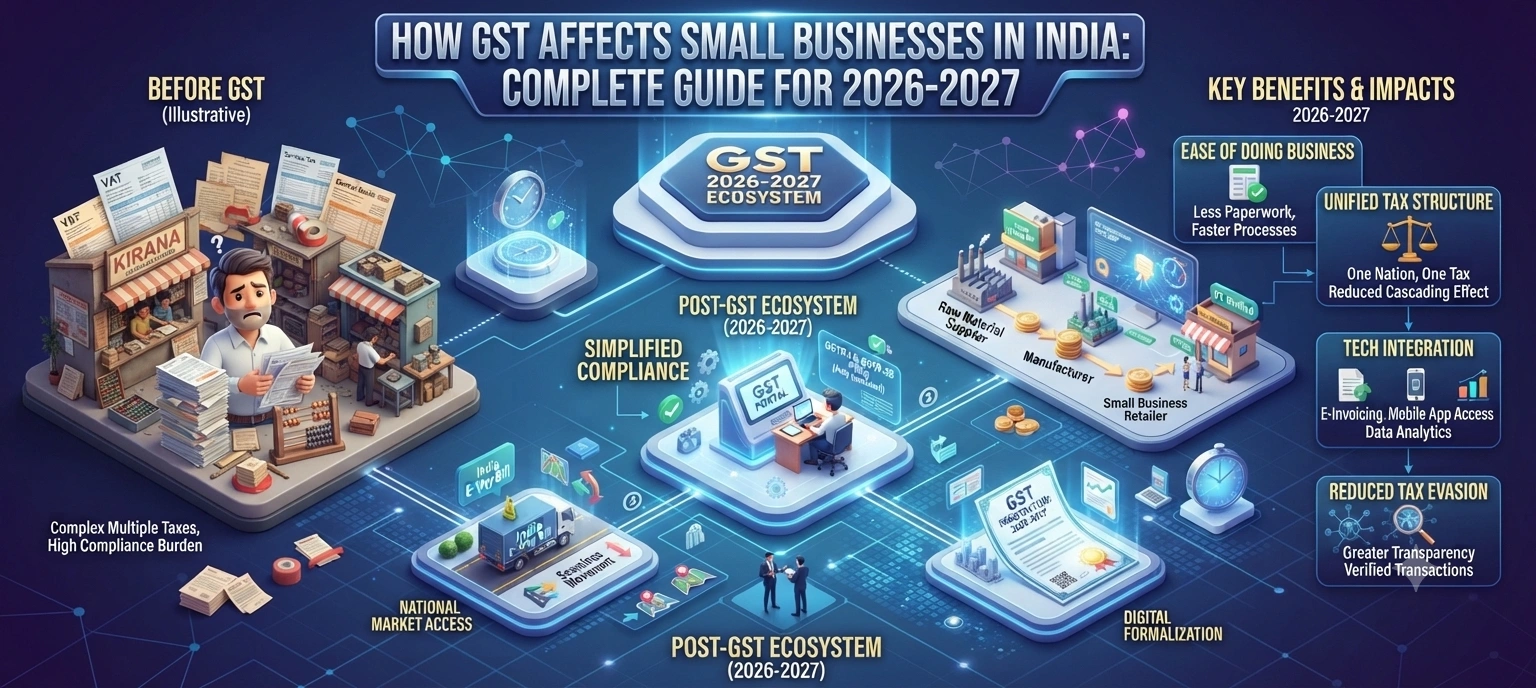
Startups can claim input tax credit on GST paid on purchases and services. Additionally, startups with turnover below Rs. 40 lakhs can opt for the composition scheme, which offers a lower GST rate of 1-2%.
| Tax Benefit | Details | Duration |
|---|---|---|
| Section 80-IAC | 100% profit deduction | 3 consecutive years |
| Section 54GB | Capital gains exemption | One-time benefit |
| Patent Rebate | 80% rebate on filing fees | Applicable to all patents |
| GST Composition | 1-2% GST rate | Up to Rs. 40 lakhs turnover |
Regulatory Exemptions and Compliance Benefits
Beyond tax benefits, startup registration provides numerous regulatory exemptions that reduce compliance burden and operational costs.
- Exemption from filing Form INC-22A for change of directors for first 5 years
- Exemption from filing annual financial statements and annual returns for first 3 years (if turnover below Rs. 1 crore)
- Exemption from holding physical board meetings for first 5 years
- Exemption from maintaining physical registers and documents for first 5 years (can maintain digitally)
- Simplified compliance requirements under MCA rules
- Exemption from filing quarterly returns under Shops and Establishments Act
- Priority processing of applications and approvals from government agencies
New 2024 Updates and Schemes
The Government of India has announced several new initiatives and updates in 2024 to further support the startup ecosystem and make registration more accessible.
Extended Recognition Period
The recognition period for startups has been extended from 7 years to 10 years from incorporation. This provides startups with a longer window to claim tax benefits and regulatory exemptions, allowing them more time to stabilize and scale their operations.
Increased Turnover Limit
The annual turnover limit for startup recognition has been increased from Rs. 100 crores to Rs. 100 crores, with provisions for sector-specific higher limits. This allows larger startups to access benefits and recognition.
Digital-First Registration
DPIIT has launched a fully digital registration process with e-signature support. Startups can now complete the entire registration process online without physical document submission, reducing processing time to 3-5 working days.
Sector-Specific Incentives
New incentive schemes have been introduced for startups in priority sectors including AI, deep tech, green technology, space tech, and biotechnology. These sectors receive enhanced tax benefits and funding support.
Startup India Seed Fund Scheme 2024
The government has allocated Rs. 945 crores for the Startup India Seed Fund Scheme in 2024. This fund provides seed funding up to Rs. 50 lakhs to recognized startups for proof of concept, prototype development, and market entry.
Startups in deep tech and AI sectors can now access up to Rs. 50 lakhs in seed funding through the government scheme, significantly reducing the need for external investment in early stages.
Compliance Timeline and Deadlines
Understanding compliance timelines is crucial for startups to maintain their recognition status and avoid penalties.
| Compliance Activity | Frequency | Deadline |
|---|---|---|
| Annual Compliance Certificate | Yearly | Within 30 days of FY end |
| Income Tax Return Filing | Yearly | 31st July of next FY |
| GST Return Filing | Monthly/Quarterly | 20th of next month/quarter |
| Board Meetings | Quarterly (exempted for 5 years) | As per MCA rules |
| Payroll Compliance | Monthly | 15th of next month |
Common Mistakes to Avoid During Registration
Many startups make preventable mistakes during the registration process that can lead to rejection or delayed approval. Here are the most common pitfalls to avoid.
- Incomplete or inaccurate documentation: Ensure all documents are complete, properly signed, and match the information in your application
- Weak business plan: Your business plan should clearly articulate innovation, market opportunity, and competitive advantage
- Misrepresenting business activities: Be honest about your business activities; DPIIT conducts thorough verification
- Failing to meet eligibility criteria: Verify that your startup meets all eligibility requirements before applying
- Ignoring compliance requirements: Maintain proper records and file all required documents on time
- Not updating information: Inform DPIIT of any changes in directors, business activities, or other material information
- Missing deadlines: Keep track of all compliance deadlines to maintain your recognition status
Providing false information or misrepresenting your business activities can lead to rejection of your application and potential legal consequences. Always ensure complete transparency in your registration application.
Frequently Asked Questions
Q1: How long does startup registration take?
The registration process typically takes 7-15 working days from the date of application submission. With the new digital-first approach in 2024, processing time has been reduced to 3-5 working days in most cases. However, if additional information is requested, the timeline may extend.
Q2: Can a partnership firm register as a startup?
Yes, partnership firms are eligible for startup registration. However, the partnership must be registered with the Registrar of Firms and must meet all other eligibility criteria including age, turnover, and innovation requirements.
Q3: What happens if my startup exceeds the turnover limit?
If your startup exceeds the annual turnover limit of Rs. 100 crores in any financial year, your recognition status will be withdrawn. However, you can still claim tax benefits for the years in which you were recognized as a startup.
Q4: Can I claim Section 80-IAC benefits for multiple years?
Yes, you can claim Section 80-IAC benefits for 3 consecutive financial years. You have the flexibility to choose any 3 consecutive years within 7 years from the date of incorporation. This allows you to strategically time your benefit claim based on your profitability.
Q5: What documents are required for annual compliance?
For annual compliance, you need to file an Annual Compliance Certificate from a Chartered Accountant, Income Tax Returns, GST returns (if applicable), and maintain updated records of directors, shareholders, and business activities. The specific requirements depend on your company structure and turnover.
Q6: Is startup registration mandatory to claim tax benefits?
Yes, DPIIT recognition is mandatory to claim Section 80-IAC tax benefits. However, some other benefits like patent rebates and capital gains exemptions may be available without formal registration. It is advisable to get DPIIT recognition to access the full range of benefits.
Practical Example: Startup Registration Journey
Case Study: TechVision Innovations Pvt Ltd
TechVision Innovations is an AI-based software startup incorporated in January 2023. The company developed an innovative machine learning platform for predictive analytics. Here is their registration journey:
- Month 1-2: Prepared comprehensive business plan, gathered all required documents including patent applications, financial statements, and team credentials
- Month 3: Registered on DPIIT portal and submitted application with all supporting documents
- Month 3-4: DPIIT requested additional technical documentation and clarification on innovation aspects
- Month 4: Submitted additional documents and received DPIIT recognition certificate
- Benefits Realized: Claimed 100% profit deduction under Section 80-IAC for FY 2023-24, saved Rs. 15 lakhs in income tax, received Rs. 30 lakhs from Startup India Seed Fund, availed 80% rebate on patent filing fees
This example demonstrates how proper planning and documentation can lead to quick approval and significant financial benefits.
Conclusion
Startup registration in India is a strategic step that provides numerous benefits including substantial tax exemptions, regulatory relief, and access to government funding. The process has become increasingly streamlined with digital-first approaches and new 2024 updates making registration faster and more accessible. By understanding the eligibility criteria, preparing comprehensive documentation, and following the registration process carefully, startups can unlock significant value and accelerate their growth trajectory.
The tax benefits alone, particularly the 100% profit deduction under Section 80-IAC, can result in substantial savings during the critical growth phase. Combined with regulatory exemptions and access to government funding schemes, startup registration becomes an essential component of any startup's business strategy. Entrepreneurs should prioritize obtaining DPIIT recognition early in their journey to maximize the available benefits and ensure compliance with regulatory requirements.
As the startup ecosystem continues to evolve, staying updated with the latest schemes, benefits, and compliance requirements is crucial. The 2024 updates demonstrate the government's continued commitment to supporting innovation and entrepreneurship in India. Startups that leverage these benefits effectively can significantly reduce their operational costs and accelerate their path to profitability and scale.
" } ```
© 2026 Tax Esquire | Expert CA Services in Greater Noida, Uttar Pradesh
8810380146 | info.taxesquire@gmail.com | taxesquire.in
This document is for informational purposes only. For personalised tax advice, consult our chartered accountants.